Spider Fighting: Hero Game
- 4.5
- Rating
- 100.00M
- Installs
- Free
- Price

 Analysis by App-foxy
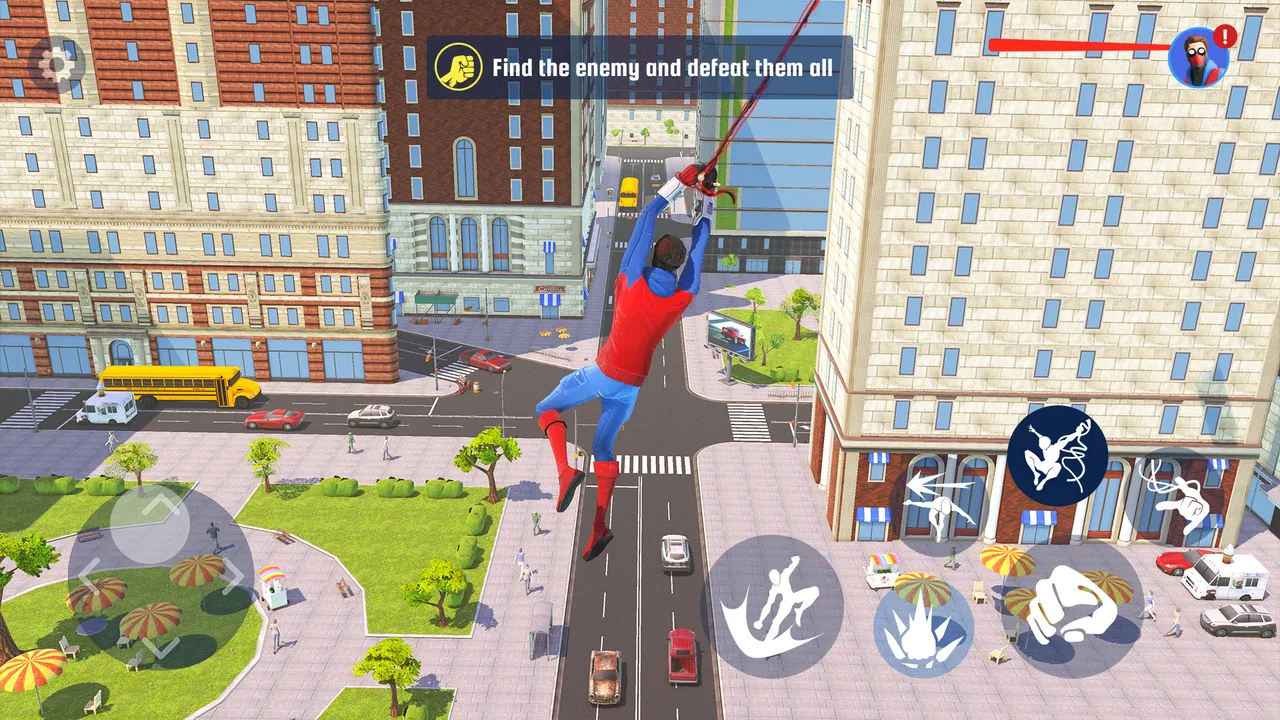
Spider Fighting: Hero Game caught my attention because it takes a familiar superhero idea and puts the focus on direct action: I control a spider-inspired hero while moving through a dangerous city and fighting its threats. That simple promise is also the game’s main strength. It is easy to understand within seconds, quick to start, and aimed at players who want a casual action game rather than a complicated role-playing system.
After spending time with it, I see a game built around the immediate satisfaction of moving, attacking, and clearing trouble from the streets. It comes from Zego Studio and sits in the action category, with a Teen content rating. It is free to download, although optional purchases range from $0.99 to $94.99 per item. That combination makes it accessible to try, but it also means I would approach the progression with the same caution I use for any free-to-play action title.
The central capability worth discussing is the way the game turns the spider-hero fantasy into a repeatable street-fighting loop. Rather than asking me to learn a large world before the action begins, it gives me a recognizable role and lets me get on with the fight. For a short session while waiting for a bus or taking a break, that directness is useful. For someone expecting a deep superhero simulation, however, the experience may feel more focused and limited than the theme suggests.
You May Also Like

 Blood Strike: 2.5 Anniversary
Blood Strike’s Loadouts Turn Every Drop Into a Tactical Gamble
A close look at Blood Strike’s custom loadouts: how fast access to signature weapons reshapes its battle royale rhythm, rewards preparation, and narrows the gap between fights.

 Pandora - Music & Podcasts
Pandora’s Music Is Easy to Start, but Harder to Recover
Pandora’s strength is its low-effort path from a seed to a station. Its weak spot is how much confidence it asks you to place in connection, setup, and quiet recovery.

 8 Ball Pool
 Is Built on Rivalries, Rematches, and Routine
A close look at the rivalries, rematches, shared routines, and unanswered safety questions that turn a quick pool match into a persistent mobile community.

 Samsung Music
’s Quiet Strength Is Playing What You Already Own
Its reach comes less from spectacle than from dependable access to a personal library. That simplicity is both the app’s strongest retention engine and its ceiling.

 AccuWeather: Weather Radar
AccuWeather Review: A Quick, Clear Forecast for Everyday Decisions
For everyday plans, the best forecast is the one you can understand quickly. AccuWeather makes rain timing, radar, and local conditions easy to act on, with a few trade-offs.

 Hill Climb Racing
Why Hill Climb Racing Still Turns Crashes Into One More Run
A tiny car, a bumpy hill and one more upgrade: Hill Climb Racing keeps resurfacing because its simple chaos makes every near-miss feel personal.
More From Our News Desk
View All News


Why the spider-hero combat is the whole experience
The appeal here is not difficult to explain: I get to play as a fast, agile hero in a city where combat is the main answer to danger. The store summary describes the goal as becoming a spider hero and conquering a vice town, but the practical feeling is more personal than that wording suggests. I am not managing a team or building a long strategy around several characters. I am concentrating on the hero in front of me and the immediate problem represented by the next fight.
That narrow focus helps the game feel approachable. I do not need to commit to a long explanation before understanding what I am supposed to do. The fantasy works because the character gives every encounter a clear identity: I am not simply controlling another anonymous fighter. I am playing a wall-crawling, comic-book-style protector whose job is to push back against criminal activity.
The important capability is fast, readable action, not superhero storytelling on a grand scale. That distinction matters when deciding whether to install it. If I want a game that delivers a quick burst of fighting with a familiar hero theme, this is a sensible match. If I want a carefully written campaign, a wide cast of official comic characters, or a highly technical combat system, I would look elsewhere.
The game’s broad reach supports that casual appeal. It has passed 50 million installs and holds a 4.4 average from around 151,000 ratings, with roughly 1,200 written reviews. Those figures do not tell me whether every player will enjoy the combat, but they do show that the basic concept has found a large audience. I can understand why: the premise is instantly recognizable, and the free entry point removes the biggest barrier to trying it.
What the action feels like in a normal session
In practice, I treat each session as a small action break rather than a full evening commitment. I open the game, get into the role of the hero, and focus on the immediate confrontation. This structure is helpful when I want something more active than a puzzle but less demanding than a large open-world game. The game does not need to become my main hobby to be useful; it can simply fill a few spare minutes with familiar superhero energy.
The city setting also gives the fights a stronger sense of purpose than a collection of disconnected arenas would. Even when I am mainly thinking about the next opponent, the idea of protecting a troubled town gives the action a simple emotional direction. I am not fighting only to increase a number on a screen. I am pushing through a hostile environment as a hero, which makes repeated encounters easier to accept.
That said, the setting should not be mistaken for a fully open urban simulation. The most enjoyable way to approach it is to see the town as the stage for the fighting, not as a replacement for a large sandbox adventure. Players who expect extensive exploration, civilian interaction, or a detailed city routine may find the superhero backdrop less important than the combat loop itself.
Small habits that make the fighting more enjoyable
My first practical tip is to avoid treating every encounter as a frantic button-pressing contest. Even in a straightforward action game, I get better results when I watch the immediate threat before committing to an attack. A short pause to read where danger is coming from can make the hero feel more controlled and can reduce the frustration that comes from rushing into a group.
I also prefer playing in short, deliberate sessions instead of continuing automatically once my attention drops. Action games can make repeated fights feel less satisfying when I am tired, and this one works best when I am engaged enough to react. A useful routine is to play a few encounters, decide whether the current pace still feels enjoyable, and stop before the repetition turns into a chore.
Another worthwhile habit is to separate genuine difficulty from impatience. If a fight goes badly, I do not immediately assume that I need to spend money. I first try changing my timing, approaching the encounter more carefully, or taking a break. That is especially important in a free game with optional purchases, because a moment of frustration can make an upgrade look more necessary than it really is.
How it works in everyday use
The most realistic use case is a player who wants a recognizable action game that can be picked up without preparation. Imagine having ten minutes before an appointment. A strategy game might require remembering a complicated build, while a large adventure game might leave too little time to make meaningful progress. Spider Fighting: Hero Game fits that gap better because its identity is clear from the start: step into the hero role and deal with the threat in front of you.
I would also recommend it to someone who enjoys superhero themes but does not want a licensed blockbuster experience that demands a powerful device, a large download commitment, or hours of attention. The game’s minimum operating-system requirement is Android 7.0, which places it within reach of many older Android devices. That does not guarantee identical performance on every phone, but it does make the entry point feel less restrictive than games designed only for newer hardware.
For a younger player, the Teen rating is worth taking seriously. The game’s hero-versus-criminal setup is easy to understand, but parents should still consider whether action fighting is appropriate for the person using the device. The rating also tells me that this is not being presented as a gentle cartoon experience for every age group. It is better suited to players who are comfortable with a more direct combat theme.
The free price is another practical advantage. I can install it and decide whether the movement and fighting suit me without paying up front. However, free does not mean completely cost-free in the broader sense. Optional items are available, and the highest listed purchase reaches $94.99. I would therefore recommend checking the purchase settings on a shared device, especially if children use the same account. That is not a criticism of the core concept, but it is an important part of using the game responsibly.
What I would check before committing to it
Before settling in, I would ask myself what kind of action I actually want. If I enjoy repeating a clear hero routine and improving through practice, the game has a good chance of working for me. If I need a strong narrative to motivate every mission, I may lose interest sooner. The superhero theme attracts me, but the lasting value comes from whether the fights themselves remain satisfying after the first impression fades.
I would also think about how I feel toward free-to-play progression. Some players are comfortable ignoring optional purchases and treating the game as a casual diversion. Others dislike seeing any paid shortcut or purchase prompt in an action game. Neither reaction is wrong. The important trade-off is knowing that the free download is an invitation to try the experience, not a promise that every part of progression will feel equally frictionless.
The current version is 3.9.2, so I would keep the app updated through the normal store process when an update is available. Staying current is sensible for any game because it can help maintain compatibility and ensure that the installed build matches the developer’s active release. I would not install it solely because of the version number, though. The real question remains whether its focused fighting style matches my expectations.
The best situation for playing
Spider Fighting: Hero Game is at its best when I want an uncomplicated action session with a strong visual idea behind it. I can imagine recommending it to a friend who likes superhero games but does not want to learn a dense control system. The spider-hero identity gives the experience more personality than a generic street brawler, while the city conflict provides enough context to make the fights feel connected.
It is also a reasonable choice for someone returning to mobile gaming after a long break. There is no need to begin with a complicated understanding of a fictional universe. The role is familiar, the goal is direct, and the action can be judged on its own terms. That makes it easier to hand to a casual player than a game that expects knowledge of several characters, factions, or storylines.
My preferred scenario would be a short evening break when I want to be active but not mentally overloaded. I would play with notifications muted, avoid making purchase decisions during a difficult encounter, and judge the game by the quality of its moment-to-moment control. That approach keeps the focus on what it does well instead of allowing the free-to-play structure to dominate the session.
The game is less convincing as a substitute for a full superhero adventure. A console-style open world, a story-driven comic game, or a deeper fighting title would be better for a player who wants exploration, character development, or complex combinations. This is a focused mobile action game, and I think it becomes more enjoyable once I stop asking it to be something larger.
How it compares with familiar alternatives
Compared with endless runners, this game offers a more confrontational kind of action. I am not merely avoiding obstacles while moving forward; the hero fantasy gives the session a sense of opposition and purpose. Compared with traditional fighting games, though, it is better approached as a mobile superhero brawler than as a competitive test of precise technique. Players who want strict rounds, highly technical matchups, or an esports-style balance may prefer a dedicated fighting game.
Compared with large open-world superhero titles, this one wins on approachability. I can start without committing to a huge map or a long story. The trade-off is depth: the city theme does not automatically provide the same freedom as a true sandbox, and the action loop may feel narrower for players who want constant discovery.
Compared with paid premium games, the free download makes experimentation easier, but the optional purchase structure can create a different kind of pressure. A premium game asks for money at the beginning and then may feel more straightforward afterward. Here, I keep the initial cost at zero, but I need to be more alert to how spending fits into my own limits. That is the most important comparison for anyone choosing between this and a one-time purchase.
The trade-offs that shape the experience
The clearest strength is immediacy. I do not need to be a superhero expert to understand the appeal, and I do not need to reserve a large block of time to enjoy a session. The game’s action identity is easy to communicate, which is one reason it works well as a recommendation for a friend who wants something simple to try.
The clearest limitation is also immediacy: a game built around quick fighting can become repetitive if the encounters do not continue to feel fresh. I would not judge it by the same standard as a story-heavy adventure. Instead, I would ask whether the act of controlling the hero remains enjoyable after the novelty of the theme wears off. If my answer becomes no, more time or spending is unlikely to solve the underlying problem.
The purchase range deserves a careful mention because it changes how I approach progression. The low-end items may feel harmless, but the presence of a much higher-priced option means I would set a personal spending rule before playing. For me, that rule would be simple: only buy something if I already enjoy the game without it, and never make a purchase to escape a temporary moment of frustration.
There is also a device and audience trade-off. Android 7.0 support makes the game approachable for owners of older software, but older phones can still differ in screen size, responsiveness, and general performance. I would test the controls on my own device before deciding whether it deserves regular play. The Teen rating similarly narrows the audience, even though the superhero concept might initially sound suitable for younger children.
One useful way to evaluate the game is to give it a fair trial without trying to maximize everything immediately. I would play naturally, notice whether the controls feel comfortable, and see whether I look forward to another encounter. That method avoids confusing the excitement of unlocking or purchasing something with genuine enjoyment of the combat itself.
Who gets the most from this game
I think the strongest audience is made up of casual action players, superhero fans who enjoy a straightforward premise, and Android users looking for a free game that can fill short breaks. The large install base and solid average rating suggest broad appeal, but I would still describe it as a specific kind of fun rather than a universal recommendation. It rewards players who like direct objectives and repeated fighting more than those who need a constantly changing adventure.
It is particularly suitable for someone who wants to try a spider-themed hero without paying at the start. The free entry point lets me make that decision based on actual play rather than screenshots or a trailer. If the controls click with me, the simple structure can be relaxing. If they do not, I have learned that quickly without committing to a purchase.
I would steer competitive fighting enthusiasts toward a game designed around precise matchups, and I would steer story-focused players toward a narrative superhero adventure. I would also advise parents to review the Teen rating and supervise purchases on shared devices. For anyone uncomfortable with optional spending, the game can still be worth testing, but only with a clear decision to keep purchases disabled or tightly controlled.
My final view is positive but measured. Spider Fighting: Hero Game understands the value of a clear fantasy: become a spider-style hero, enter a troubled town, and fight your way through the immediate danger. That focus makes it easy to recommend for short, casual action sessions, especially because it is free to try and supports Android 7.0 or later.
At the same time, I would not present it as a replacement for a deep superhero adventure or a technical fighting game. Its best qualities are its accessibility, recognizable theme, and direct combat rhythm; its weaknesses come from the same narrow focus and the presence of optional purchases. If I approach it as a compact mobile action game rather than an expansive comic-book universe, I get a much fairer and more enjoyable experience.
For me, the deciding test is simple: after the first few encounters, do I still enjoy controlling the hero when there is no need to chase a purchase or a milestone? If the answer is yes, this game can become a handy action companion for spare moments. If the answer is no, another genre or a more substantial superhero game will be a better use of my time. Spider Fighting: Hero Game is worth trying for the right player, provided that player values immediate street combat more than depth, story, or long-term complexity.
FAQs for Spider Fighting: Hero Game
01What is the main objective of Spider Fighting: Hero Game?
In Spider Fighting: Hero Game, players take on the role of a superhero with spider-like abilities. The main objective is to combat various villains, defend the city, and complete missions to progress through levels. The game combines action-packed fighting sequences with strategic elements, allowing players to upgrade skills and unlock new powers.
02Is Spider Fighting: Hero Game free to play?
Yes, Spider Fighting: Hero Game is free to download and play. However, it includes in-app purchases that can enhance gameplay, such as purchasing special abilities, unlocking new characters, or acquiring cosmetic items. These purchases are optional, and players can enjoy the core game without spending money.
03What are the system requirements for Spider Fighting: Hero Game?
Spider Fighting: Hero Game is designed to run on most modern Android and iOS devices. It requires a minimum of iOS 11.0 or Android 5.0 to function properly. For the best experience, a device with at least 2GB of RAM is recommended to handle the game's graphics and performance demands smoothly.
04Does Spider Fighting: Hero Game require an internet connection?
Spider Fighting: Hero Game can be played offline, allowing players to enjoy the game without an internet connection. However, certain features, such as leaderboards and updates, require an internet connection. To access all the game's content and features, an occasional internet connection is advised.
05How does Spider Fighting: Hero Game handle player data and privacy?
Spider Fighting: Hero Game adheres to strict data privacy standards. It collects minimal personal data necessary for gameplay and improves user experience. The game complies with relevant privacy laws and regulations, providing players with clear information about data collection practices. Users can review the privacy policy within the app for more details.
Pros
- Engaging superhero combat mechanics.
- Stunning graphics and animations.
- Wide variety of missions and challenges.
- Customizable hero abilities.
- Intuitive controls and smooth gameplay.
Cons
- In-app purchases can be costly.
- Requires frequent internet connection.
- Occasional ad interruptions.
- Limited character customization.
- Some levels feel repetitive.

Spider Fighting: Hero Game
Gallery